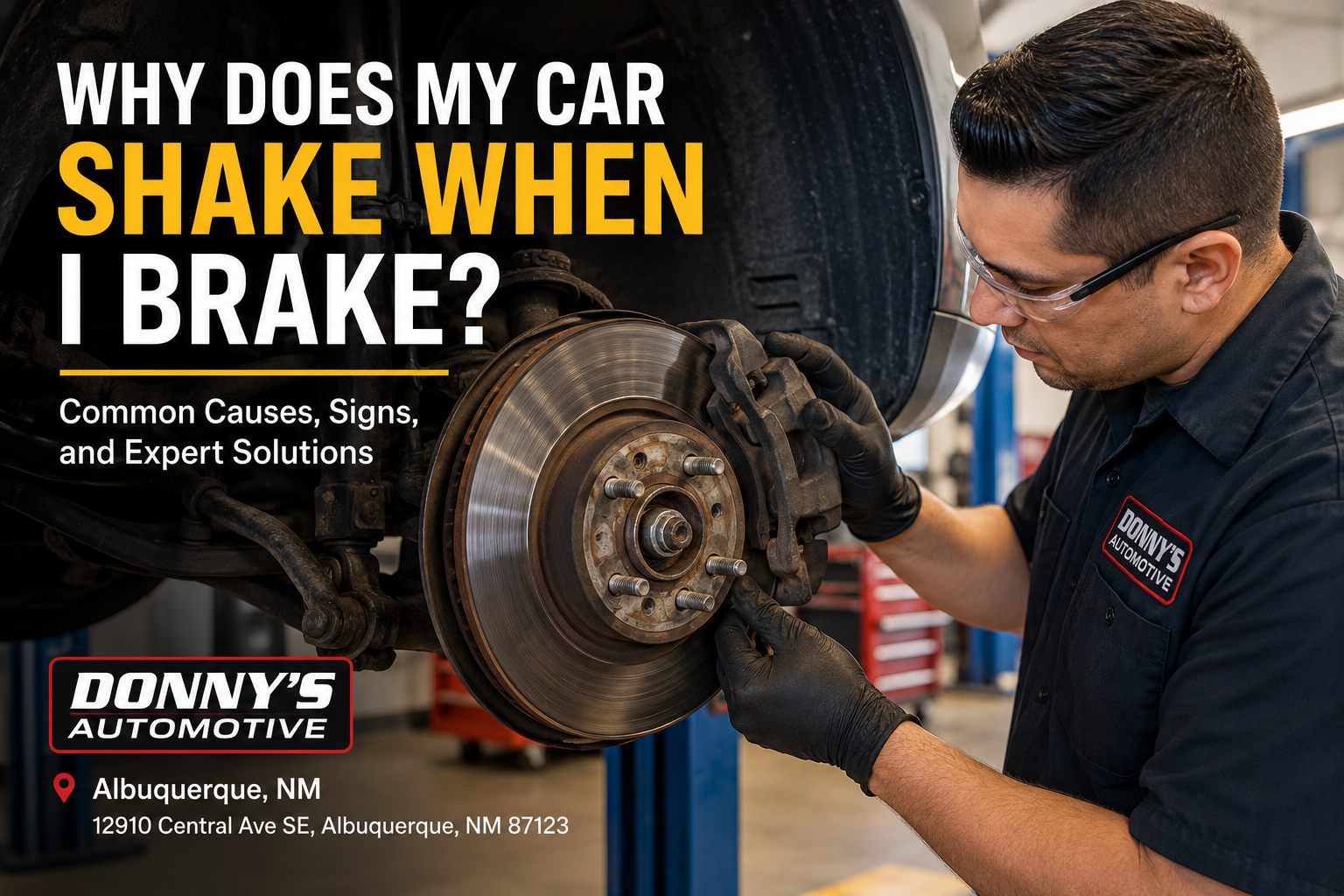
Why Does My Car Shake When I Brake? Common Causes Albuquerque Drivers Should Know
Why Does My Car Shake When I Brake? Common Causes Albuquerque Drivers Should Know
You're driving down Central Avenue in Albuquerque, approaching a red light. You press the brake pedal, and suddenly your steering wheel starts shaking.
Maybe it's a slight vibration. Maybe your entire car feels like it's shuddering every time you slow down.
Either way, you're probably wondering two things:
Why is my car shaking when I brake, and is it safe to keep driving?
The short answer? Your brakes may be trying to tell you something.
At Donny's Automotive in Albuquerque, NM, we understand how frustrating it can be when your car starts doing something unexpected. More importantly, we know how important it is to identify braking problems before they become serious safety concerns.
Let's look at what might be happening, what those vibrations mean, and when it's time to have your brakes inspected.
Why Does My Car Shake When I Brake?
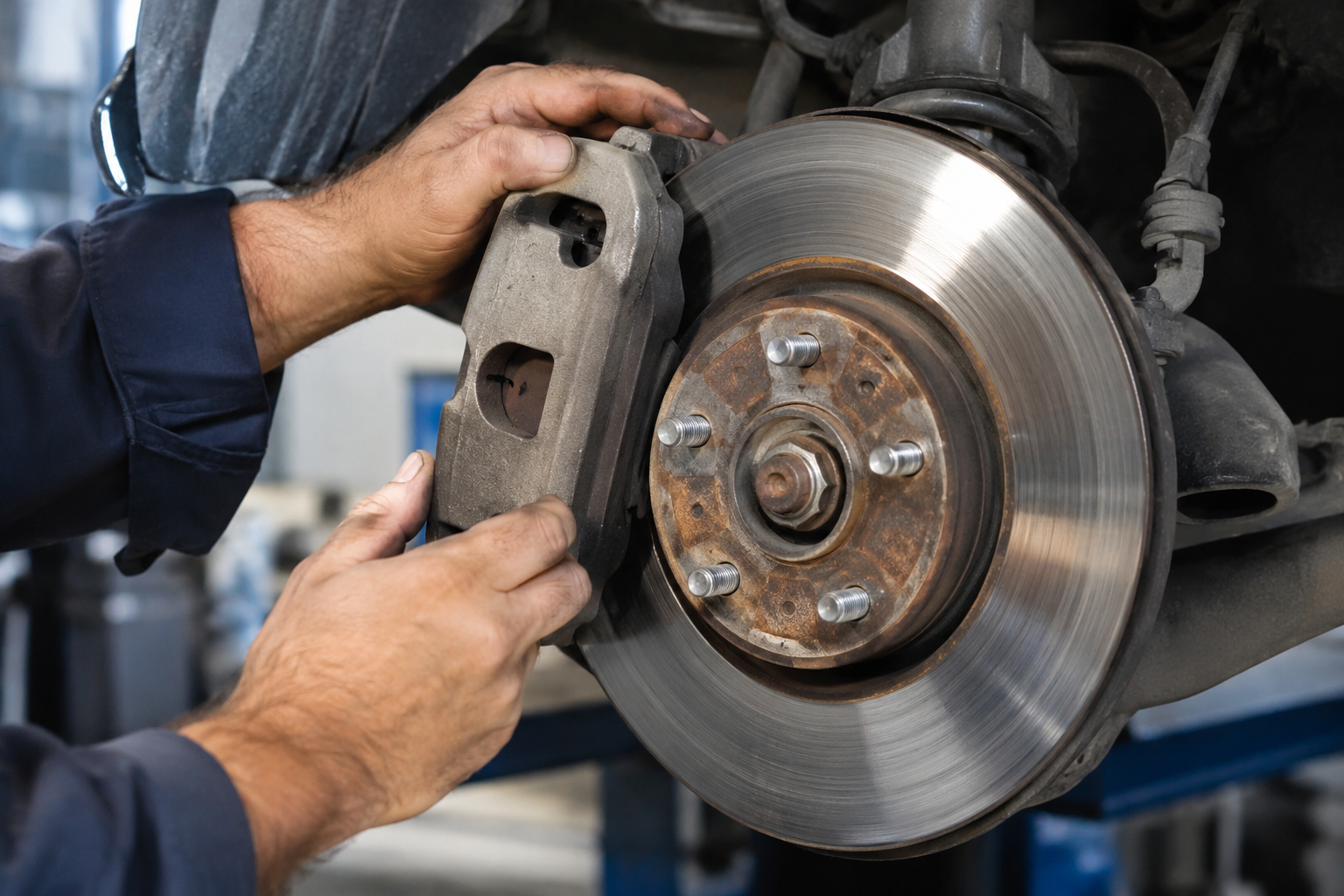
A car that shakes when braking often has uneven brake rotor thickness, brake pad
problems, sticking brake calipers, or worn suspension components.
The most common cause is uneven brake rotor surfaces that create changes in braking force as the wheels turn.
However, not every vibration comes from the brakes themselves.
The location of the shaking, when it happens, and how your vehicle responds can help narrow down the problem.
For Albuquerque drivers who regularly travel on I-40, I-25, or busy streets like Central Avenue, identifying these warning signs early can help prevent more expensive repairs and potentially dangerous driving conditions.
1. Uneven Brake Rotors: A Common Cause of Shaking When Braking
Your brake rotors are the round metal discs attached to your wheels. When you press the brake pedal, your brake pads squeeze against these rotors to slow your vehicle.
Over time, rotors can develop uneven thickness or friction surfaces.
When that happens, your brake pads may grip unevenly as the rotors turn, creating vibrations you can feel through the steering wheel, brake pedal, or vehicle.
Signs Your Brake Rotors May Be the Problem
- Your steering wheel shakes when you apply the brakes.
- The vibration becomes more noticeable when braking from higher speeds.
- Your brake pedal pulses or vibrates.
- The shaking disappears or decreases when you release the brake pedal.
You might notice this most when exiting I-40 or slowing down after driving along Tramway Boulevard.
What causes uneven brake rotors?
Excessive heat, uneven pad deposits, corrosion, improper wheel installation, and normal wear can all contribute.
Albuquerque's hot summer temperatures and frequent stop-and-go driving can add to the demands placed on your braking system.
The solution: A qualified technician can measure rotor thickness and runout to determine whether resurfacing or replacement is appropriate. Not every vibrating rotor needs replacement, but rotors must meet the manufacturer's specifications.
2. Worn or Uneven Brake Pads Can Cause Vibrations
Brake pads are designed to wear gradually as they create friction against your rotors.
However, they don't always wear evenly.
A sticking brake caliper, worn hardware, or other brake system problem can cause one pad to wear faster than another.
When braking pressure becomes inconsistent, you may experience shaking, noise, or reduced braking performance.
Warning Signs of Brake Pad Problems
- Squealing or grinding noises when braking.
- Vibrations accompanied by unusual brake sounds.
- Your car pulls toward one side when stopping.
- Braking feels less smooth than it used to.
If you're driving through Nob Hill, heading toward the University of New Mexico, or navigating Albuquerque's busy intersections, reliable braking performance matters.
The solution: Have the brake pads, rotors, calipers, and related hardware inspected together. Replacing brake pads without addressing the underlying problem may allow the vibration to return.
3. A Sticking Brake Caliper Could Be the Problem
Your brake calipers help press the brake pads against the rotors.
When they're working correctly, they apply and release braking pressure smoothly.
But a caliper piston or sliding mechanism can sometimes stick.
This may cause one brake to remain partially engaged, generating excessive heat and uneven wear.
Signs of a Sticking Brake Caliper
- Your vehicle pulls to one side when braking.
- One wheel seems unusually hot after driving.
- You notice a burning smell near a wheel.
- Your brakes feel like they're dragging.
- The car vibrates or shakes during braking.
A sticking caliper isn't something to ignore.
Excessive brake heat can damage pads, rotors, and other components. It may also reduce braking effectiveness.
The solution: A professional brake inspection can identify whether the caliper, slide pins, brake hose, or related components need service or replacement.
If you notice smoke, a strong burning smell, or significant pulling, stop in a safe location and arrange for professional assistance rather than continuing to drive.
4. Worn Suspension or Steering Parts Can Make Your Car Shake
Sometimes the brakes aren't the main problem.
Your suspension and steering systems help keep your tires stable and properly aligned with the road.
When components become worn or loose, braking can make existing problems more noticeable.
Potential causes include:
- Worn control arm bushings.
- Loose tie rods or ball joints.
- Worn wheel bearings.
- Damaged suspension components.
If your steering wheel shakes when braking, especially when accompanied by clunking noises, loose steering, or uneven tire wear, your suspension may need attention.
The solution: A complete inspection should evaluate the brakes, steering, suspension, and wheel assemblies before any repairs are recommended.
5. Tire and Wheel Problems May Contribute to Shaking
Here's something many drivers don't realize.
A shaking car doesn't always mean the brakes are responsible.
Unbalanced tires, damaged wheels, uneven tire wear, and loose wheel fasteners can create vibrations that become more noticeable as you slow down.
The important distinction is when the shaking occurs.
If your vehicle vibrates while cruising, even when you're not pressing the brakes, the tires or wheels may be contributing to the problem.
If the vibration happens primarily when braking, the braking system deserves particular attention.
Albuquerque's potholes, road construction, and rough pavement can also take a toll on tires, wheels, and suspension components.
The solution: Have your tires, wheels, wheel fasteners, and suspension checked along with the braking system.
What Does It Mean When Your Steering Wheel Shakes vs. Your Brake Pedal?
Where you feel the vibration can offer helpful clues.
Steering Wheel Shakes When Braking
This often points toward a problem involving the front brakes, steering, or front suspension.
Brake Pedal Pulsates When Stopping
A repeating pulse during ordinary braking can indicate uneven rotor thickness or another braking system issue.
However, rapid brake pedal pulsation during a hard stop on a slippery surface may simply be your anti-lock braking system (ABS) working as designed.
Entire Car Shakes When Braking
This can involve the rear brakes, multiple brake components, tires, or suspension issues.
Important: These symptoms are clues, not a diagnosis. A hands-on inspection is the best way to determine what's actually causing the vibration.
Is It Safe to Drive When Your Car Shakes While Braking?
It depends on the cause and severity, but brake-related shaking should never be ignored.
A mild vibration doesn't automatically mean your brakes are about to fail.
However, it can be an early warning of a problem that may become more serious.
Have your vehicle inspected promptly, and avoid unnecessary driving until you know the cause.
When Should You Stop Driving?
- Your car shakes violently when braking.
- Your vehicle pulls sharply to one side.
- You hear loud grinding or metal-on-metal noises.
- Your brake pedal feels unusually soft or sinks toward the floor.
- Your braking distance increases noticeably.
- You notice smoke or a strong burning smell near a wheel.
If any of these symptoms occur, pull over safely and arrange for towing or roadside assistance.
Your safety is more important than reaching your destination.
How Can Albuquerque Drivers Prevent Brake Shaking?
While not every brake problem is preventable, a few good habits can help protect your braking system.
1. Schedule Regular Brake Inspections
Brake inspections can help identify worn pads, rotor problems, sticking calipers, and other concerns before they become more expensive repairs.
2. Avoid Unnecessary Hard Braking
Repeated aggressive braking generates additional heat.
Whenever conditions allow, maintain a safe following distance and slow down gradually.
3. Pay Attention to New Sounds and Vibrations
Squealing, grinding, pulling, or unusual pedal feedback can indicate that something needs attention.
Don't wait until the problem becomes severe.
4. Keep Your Tires and Suspension in Good Condition
Proper tire maintenance and timely suspension repairs help your vehicle remain stable during braking.
5. Follow Your Vehicle Manufacturer's Maintenance Recommendations
Different vehicles have different inspection and service requirements.
Your owner's manual provides the best starting point for recommended maintenance intervals.
Frequently Asked Questions About Brake Shaking in Albuquerque, NM
Why does my car shake when braking at high speeds?
Shaking when braking from highway speeds is often associated with uneven brake rotor thickness or friction surfaces. Worn steering or suspension components can also contribute. A brake inspection can help identify the actual cause.
Can bad brake pads make my steering wheel shake?
Yes. Unevenly worn brake pads or problems affecting how they contact the rotors can contribute to vibration. However, rotor and suspension issues should also be checked.
Why does my car shake when braking downhill?
Downhill braking can place additional heat and stress on the brake system, making existing rotor or caliper problems more noticeable. Use the appropriate lower gear when recommended by your vehicle manufacturer, and avoid riding the brakes on long descents.
Will replacing my brake pads stop the shaking?
Not necessarily. If uneven rotors, sticking calipers, or worn suspension components are responsible, new brake pads alone may not solve the problem.
How much does it cost to fix a car that shakes when braking in Albuquerque?
The cost depends on the cause, your vehicle, and the parts or labor required. A brake inspection can help determine whether you need pads, rotors, caliper service, or another repair. It's best to get a diagnosis before paying for parts that may not solve the issue.
Can I keep driving if my brakes only shake a little?
Even mild shaking deserves attention. Some causes are relatively straightforward to repair, while others may affect your ability to stop safely. Schedule an inspection promptly rather than waiting for the vibration to worsen.
Car Shaking When You Brake? Visit Donny's Automotive in Albuquerque, NM
Your car shouldn't shake every time you press the brake pedal.
Whether you're commuting along I-40, driving through Nob Hill, or running errands near the Sandia Mountains, you deserve a vehicle that stops smoothly and safely.
If you've noticed steering wheel vibrations, brake pedal pulsation, grinding noises, or unusual shaking when slowing down, it's time to find out what's causing it.
At Donny's Automotive, we want Albuquerque drivers to feel informed and confident about their vehicle maintenance and repair decisions.
A proper inspection can help identify the source of the problem and determine what repairs are actually needed.
Don't guess when it comes to your brakes.
Contact Donny's Automotive today to discuss your braking concerns and arrange a brake inspection.
Donny's Automotive
Address: 12910 Central Ave SE, Albuquerque, NM 87123
Phone: (505) 312-2455
Website:https://donnysautomotive.com
Conveniently located on Central Avenue in East Albuquerque, Donny's Automotive is an option for drivers looking for local auto repair and brake service.
Call (505) 312-2455 today. Let's get to the bottom of that shaking before it becomes a bigger problem.
And if you've recently visited Donny's Automotive, consider sharing your experience in a Google review. Your feedback can help other Albuquerque drivers make informed decisions about their vehicle care.
